
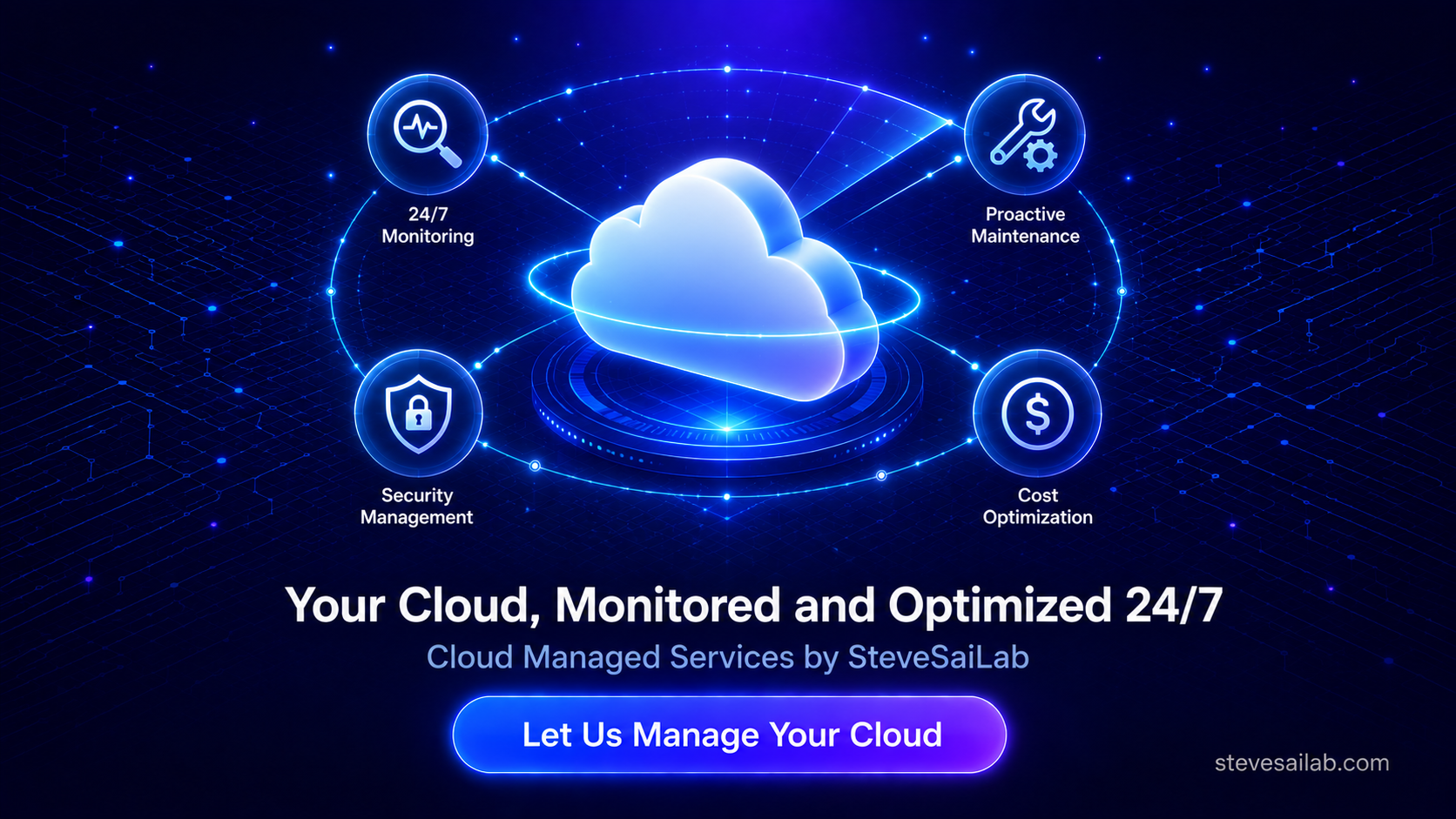
Cloud managed services entail outsourcing the operation and maintenance of your cloud to selected entities. These services take care of optimizing, securing, and managing your cloud to help avoid expensive mistakes or complications in the process.
Cloud managed services typically involve the outsourcing of the maintenance and management of a company’s cloud upon its launch. Following the deployment of a cloud, the processes involved in operating, maintaining, and monitoring it must continue to be performed seamlessly to ensure its proper utilization.
It may be practical to rely on selected entities to monitor, optimize, maintain, and secure a company’s cloud infrastructure periodically and simultaneously since doing so internally can be costly and inefficient.
Cloud managed services generally relate to the management of an organization’s cloud whether it is internal or external. The processes involved in cloud managed services are typically the same regardless of the type of cloud as long as it is digital. Cloud managed services providers usually act as an extension of their clients’ in-house IT teams.
Some of the features and benefits of cloud managed services generally include24-hour cloud monitoring and management, optimization of the cloud in accordance with the organization’s specific needs and budgets, addressing all arising issues and providing the cloud with regular backups.
In this regard, clients may enjoy minimal downtime with fewer responsibilities and concerns relating to their cloud operations.
Cloud infrastructures typically demand continued maintenance and monitoring to guarantee their security, cost-effectiveness, and high performance. Some of the reasons why businesses need cloud managed services include:
Through this, organizations can save time and effort on cloud-related issues to focus on other more deserving activities and objectives.
Cloud managed service providers ensure that clients’ clouds are running reliably and efficiently through round-the-clock monitoring of their cloud operations.
Most providers offer their services on a subscription plan that is affordable and assists clients in fully understanding what they are paying for without any additional expenses or headaches in the future.
Cloud managed service providers usually have the specialist skills and knowledge to operate, maintain, and monitor their clients’ cloud infrastructure.
Cloud managed services usually operate on a continuing basis rather than a project basis. Organizations usually start by requesting a provider to perform an assessment of their cloud infrastructure.
The provider then sets up monitoring tools, implements the needed changes to the cloud, and starts surveillance of the cloud around the clock. Thereafter, they make the needed modifications and additions to ensure the cloud infrastructure continues running smoothly.
The cloud managed service provider also ensures that they optimize the cloud in accordance with their client’s needs and budgets. In addition, they also offer clients reports on their cloud performance on a timely or regular basis as needed.
This ongoing approach generally differs from cloud consulting services that are usually situational, short-term, and only address specific cloud issues.
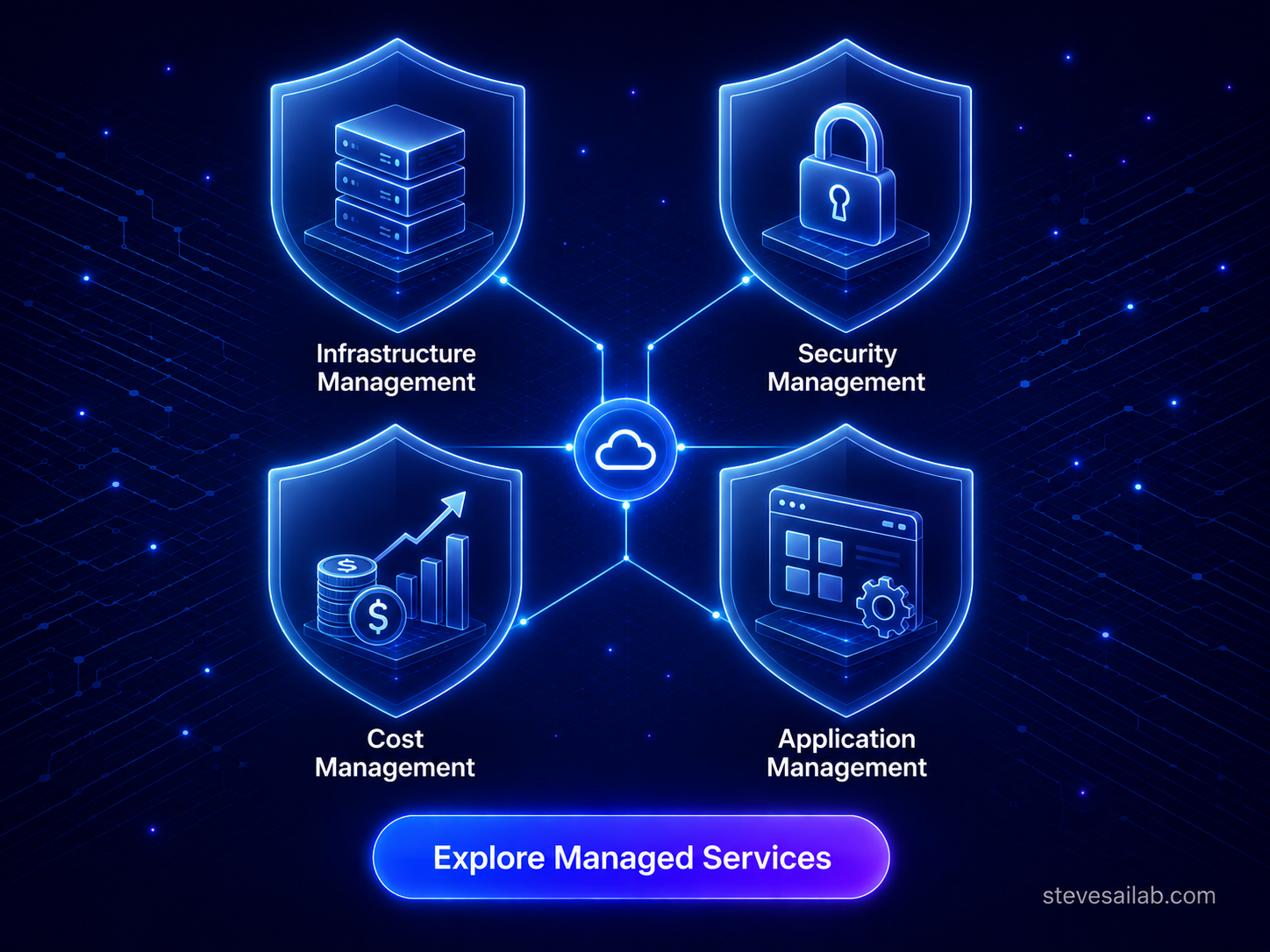
Generally, cloud managed service providers usually offer different types of services to address various cloud-related needs.
Service type
Nature
Description
Monitoring and maintenance of cloud infrastructure, including servers, storage, and networking hardware.
Ideal for business operating complex cloud environments.
Threat management and security monitoring solutions for cloud IT assets.
Best for industries with compliance and regulatory requirements.
Cost monitoring and optimization services for cloud infrastructure.
Most suitable for organizations with unpredictable cloud costs.
Hosting, deployment, performance management, and maintenance of cloud apps.
Recommended for companies operating cloud-based applications.
Most providers usually operate within the scope of a combination of the above-mentioned categories when addressing their clients’ cloud-related needs.
One of the most common features of cloud managed services usually entails overseeing the security aspects of a company’s cloud infrastructure.
Cloud managed service providers usually offer infrastructure management services together with cloud security services.
By combining both security and infrastructure management services, businesses can address their cloud-related security concerns alongside their maintenance and monitoring needs. This way, organizations can go beyond just focusing on the security aspects of their cloud infrastructure on a standalone basis.
The decision to adopt managed cloud services or operate the cloud internally depends on an organization’s in-house capabilities, budget, and specific cloud-related needs.
Operating cloud infrastructure internally is ideal for organizations that have the skill and resources to manage their cloud in-house.
By contrast, managed cloud services are more suitable for organizations that lack the skill or resources to operate their cloud internally.
Besides, organizations that operate relatively complex cloud infrastructures may need to consider managed cloud services to address their specific cloud-related needs and challenges.
Some companies may first leverage cloud consulting services to help them identify their cloud-related needs and capabilities before deciding whether to go with managed cloud services or operate their cloud internally.
Some cloud managed service providers usually offer various levels of support and services compared to others. As such, it is important to perform due diligence when identifying a provider that is in a position to meet your specific organizational needs.
Some of the main considerations when looking for a cloud managed service provider include their response time, security expertise, level of transparency, and scalability in accordance with your cloud infrastructure needs.
A competent provider may also offer additional services such as machine learning development services depending on their area of specialization.
Cloud managed services play a critical role in supporting your cloud infrastructure needs following the initial setup and deployment of your cloud.
Apart from providing maintenance and monitoring services to ensure smooth operations of your cloud infrastructure, cloud managed service providers can also help optimize your cloud in terms of cost and performance while addressing any security concerns that may arise.
Companies that adopt the services of cloud managed service providers stand to benefit from minimal downtime and operational costs while enjoying the convenience that comes with availing expert skills to handle their cloud operations.
They generally comprise monitoring, patching, and optimization of the infrastructure, as well as data backup and disaster recovery processes. In addition, cloud security services that provide continuous protection and compliance are also part of the service.
The price range varies depending on the scale and complexity of the infrastructure, being billed either as a subscription or hourly. However, in general, the costs may vary from several hundred to several thousand dollars per month.
Cloud migration services assist in migrating the data and application layer to the cloud, while managed cloud services ensure that everything is operating properly. Both these services are interrelated since most often companies need assistance with both migration and management of their cloud infrastructure.
Since small organizations often cannot afford to maintain an experienced team of cloud experts, cloud managed services allow such companies to ensure continuous operation of their critical systems and protect their data without spending on headcount.
Most often, organizations are guided by such factors as the speed of response, security, and reporting. In addition, many companies today prefer to use the services of a cloud consulting provider to determine their needs in cloud infrastructure before choosing a managed service provider.
We help US enterprises make this decision based on their specific workload requirements, existing infrastructure, and long-term AI roadmap - not platform preference.
Get expert insights on your use case and identify the most effective path forward.