
Custom generative AI development helps businesses design, build, and integrate AI systems capable of creating content, code, or data, such as text, images, and predictions, based on learned patterns. This work covers model selection, customization, integration, and long-term optimization.
Generative AI development services are specialized offerings that help businesses design, build, and deploy AI systems capable of generating new content, such as text, images, code, or data, based on patterns learned from existing information. These services typically include model selection, fine-tuning, integration, and ongoing performance monitoring.
Interest in this technology has grown rapidly as businesses look beyond simple chatbots toward AI systems that can draft content, summarize documents, generate code, and personalize customer interactions at scale.
But building a production-ready system takes more than plugging into a public API. It requires careful planning around data, security, and how the technology fits existing business workflows.
These services cover the full lifecycle of building and deploying generative AI systems within a business environment. A typical engagement includes:
Use case discovery: Identifying where generative AI adds measurable value
Model selection or fine-tuning: Choosing a pretrained model or customizing it for specific needs
Integration: Connecting the AI system with existing software and workflows
Testing and validation: Confirming output quality, accuracy, and safety
Deployment and monitoring: Launching the system and tracking performance over time
Providers offering generative ai development services typically combine technical expertise with an understanding of how AI fits into broader business operations, not just isolated experiments.
Manual content creation and repetitive analytical work can’t scale efficiently as data volume and customer expectations grow. Generative AI addresses this gap directly.
AI models can draft marketing copy, generate code snippets, or summarize documents in a fraction of the time manual processes require.
Generative systems can tailor responses, recommendations, and communications to individual users at a scale manual personalization can’t match.
Automating repetitive creative and analytical tasks frees up skilled staff for higher-value strategic work.
Teams can prototype and test new features or products faster when AI handles first drafts, initial designs, or exploratory analysis.
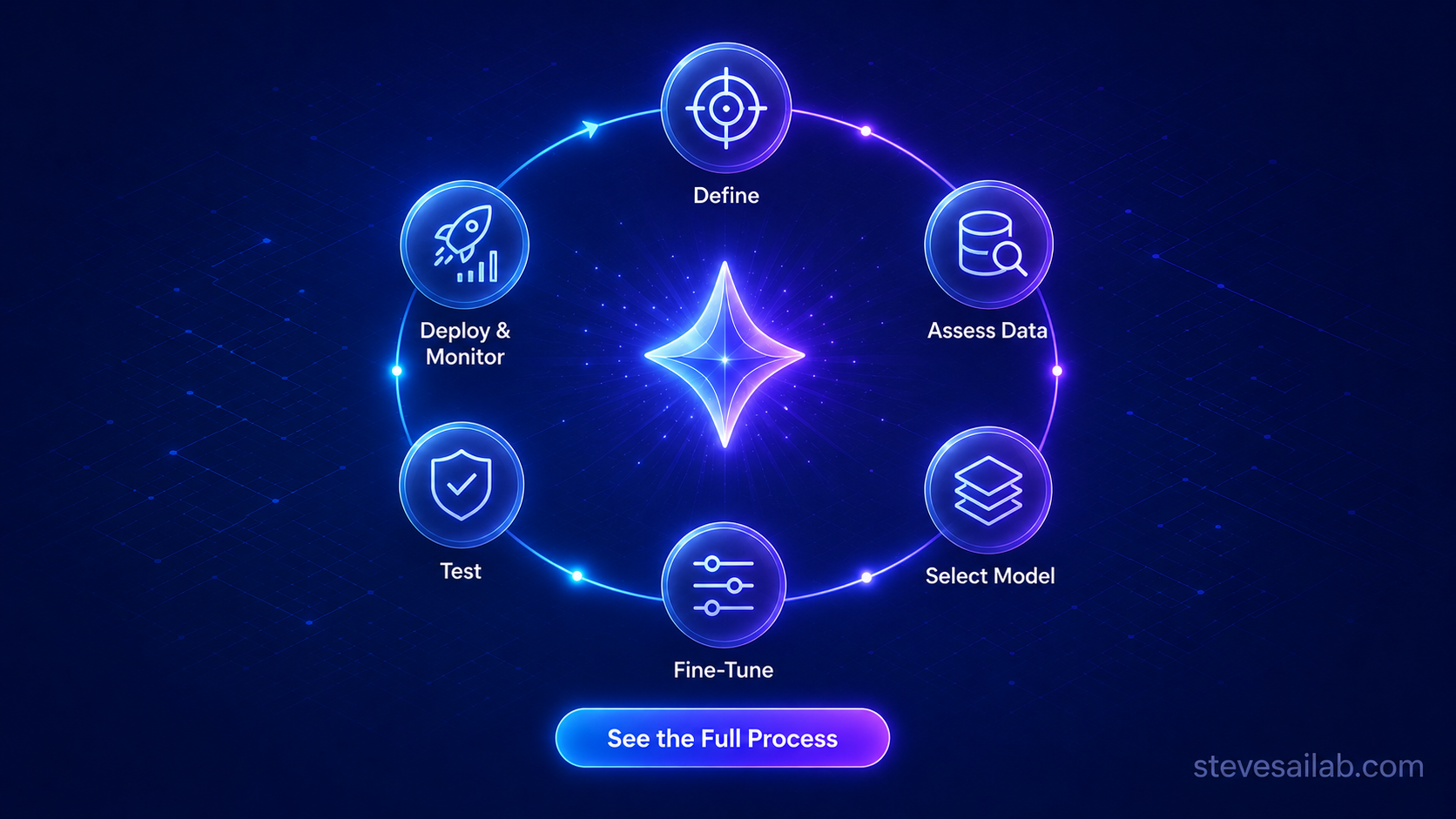
Most successful projects follow a structured sequence rather than jumping straight into deployment.
1. Problem definition: Identify a specific, measurable business use case.
2. Data assessment: Evaluate what data is available and whether it’s usable for training or fine-tuning.
3. Model selection: Choose between pretrained foundation models or custom-built systems.
4. Fine-tuning: Adjust the model to align with specific business language, tone, or requirements.
5. Testing: Validate output accuracy, relevance, and safety before launch.
6. Deployment: Integrate the model into existing applications or workflows.
7. Monitoring: Track performance and retrain as needed to maintain quality.
This structured approach reduces the risk of deploying systems that generate inaccurate or inappropriate output.
This decision affects cost, timeline, and long-term flexibility.
Foundation models
Large, pretrained models adapted for specific tasks
Faster deployment, lower upfront cost
Fine-tuned models
Foundation models customized with proprietary data
Business-specific tone, terminology, or workflows
Custom-built models
Fully built from scratch for unique requirements
Highly specialized or proprietary use cases
Most businesses start with foundation ai models and fine-tune them, since building a model entirely from scratch requires significant time, data, and computing resources.
Generative AI is often one component of a much broader enterprise ai strategy that includes predictive analytics, automation, and data infrastructure. Businesses rarely deploy generative tools in isolation.
Effective enterprise ai solutions typically combine generative capabilities with existing systems like CRMs, ERPs, or customer service platforms, ensuring AI-generated output feeds directly into real business processes rather than sitting as a standalone tool.
Not every provider has the depth needed for secure, production-grade deployment. Key factors to evaluate include:
Technical expertise: Do they have experience fine-tuning and deploying models at scale?
Data security practices: How do they handle sensitive or proprietary training data?
Industry experience: Have they built similar solutions in your sector before?
Ongoing support: Will they monitor and retrain models after deployment?
Working with an experienced generative ai development company reduces the risk of deploying systems that underperform or introduce compliance issues down the line.
Generative AI development services give businesses a structured path to building AI systems that create real value, from automating content production to powering smarter customer interactions. Success depends less on choosing the flashiest model and more on clear use cases, quality data, and careful integration with existing workflows. As adoption grows, businesses that treat this technology as part of a broader strategy, rather than a standalone experiment, will see the strongest returns. If you’re exploring where generative AI fits into your operations, starting with one focused, measurable use case is the smartest first step.
Costs vary based on complexity, ranging from a few thousand dollars for simple fine-tuning projects to six figures for custom, enterprise-scale systems. Most providers price based on scope, data requirements, and integration complexity.
Simple integrations using foundation ai models can launch in a few weeks. Custom-built or heavily fine-tuned systems, often developed with generative ai development services, can take several months depending on data readiness and complexity.
Not always, but fine-tuning for business-specific tone or terminology requires proprietary data. Providers can also help assess whether existing data is sufficient before starting a generative ai development services engagement.
Yes, when implemented correctly. Reputable providers build in safeguards like output validation, access controls, and monitoring, which are standard components of secure enterprise ai solutions designed for business environments.
A generative ai development company specializes in AI model selection, fine-tuning, and deployment, while general software vendors focus on broader application development. Specialized providers typically offer deeper expertise in AI-specific risks and performance optimization.
We help US enterprises make this decision based on their specific workload requirements, existing infrastructure, and long-term AI roadmap - not platform preference.
Get expert insights on your use case and identify the most effective path forward.