
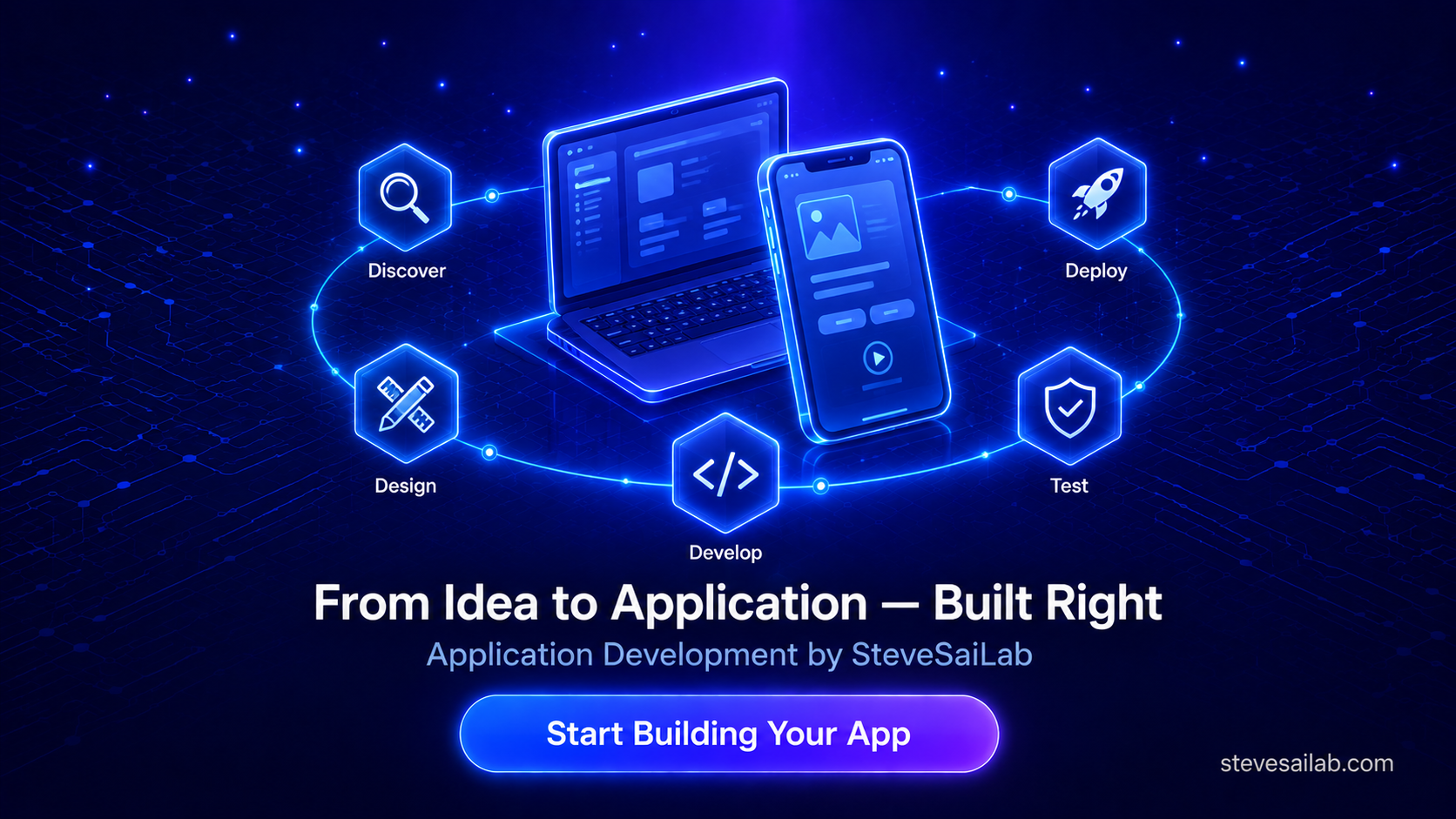
Application development refers to the process of conceptualizing, coding, testing, and maintaining a computer application. In most cases, the endeavor follows a systematic development life cycle that goes through several stages before completion and maintenance.
Application development generally means the entire process of conceptualizing or designing a computer software, coding the design into a working application, and maintaining the final product. Application development is, therefore, a complex process that involves developing computer applications that perform specific tasks for business users or the end-users.
Most often, businesses do not develop applications for the sake of having them. Instead, they do it to achieve specific goals that could not have been achievable using existing software solutions. Therefore, aside from the technical know-how of the application developer, it often requires a certain level of management expertise to ensure that an appropriate solution is selected or developed.
Application development generally refers to the entire process of conceptualizing, designing, coding, testing, deploying, and maintaining computer applications. The applications can be simple mobile applications or complex enterprise-level software. Most often, the process has a well-defined procedure that is followed both in development and maintenance.
However, the specific steps that are taken for application development may differ depending on the specific type of application software under development. Some of the key steps taken when developing applications include:
1. Requirement gathering.
2. UI/UX design.
3. Architecture design.
4. Development.
5. Testing.
6. Deployment.
7. Maintenance.
Businesses often either do it themselves or hire others to do it for them on a contractual basis. Organizations that offer these services on a contractual basis usually utilize a systematic approach to development and not by ad hoc.
The need for new application software often arises because existing software does not meet the specific requirements of a particular organization. The new software should, therefore, be able to address the shortcomings of the existing systems. Some organizations, on the other hand, develop software applications to give them an edge over their competitors.
Some of the common reasons why businesses invest in the development of new computer applications include:
1. Address specific business needs.
2. Meet specific customer expectations.
3. Enable easier and more efficient operations.
4. Enhance customer engagement.
5. Provide the business with a competitive advantage against its competitors.
6. Allow for seamless and effective business processes.
7. Allow for the continuous evolution and improvement of products and services.
Although the development of applications differs depending on the specific application software type required, most of them go through similar stages. These steps or processes are generally referred to as the application development life cycle. Some of these steps involved in the development process include discovery and planning, UI/UX design, architecture design, development, quality assurance (QA), deployment, and maintenance.
The application development life cycle is, therefore, a framework that is followed when developing computer application software. Businesses often hire professional developers to help them develop new applications or software. Most application development companies specialize in application development and offer their services on a contractual basis. The process ensures that no step is overlooked in the development of a computer application.
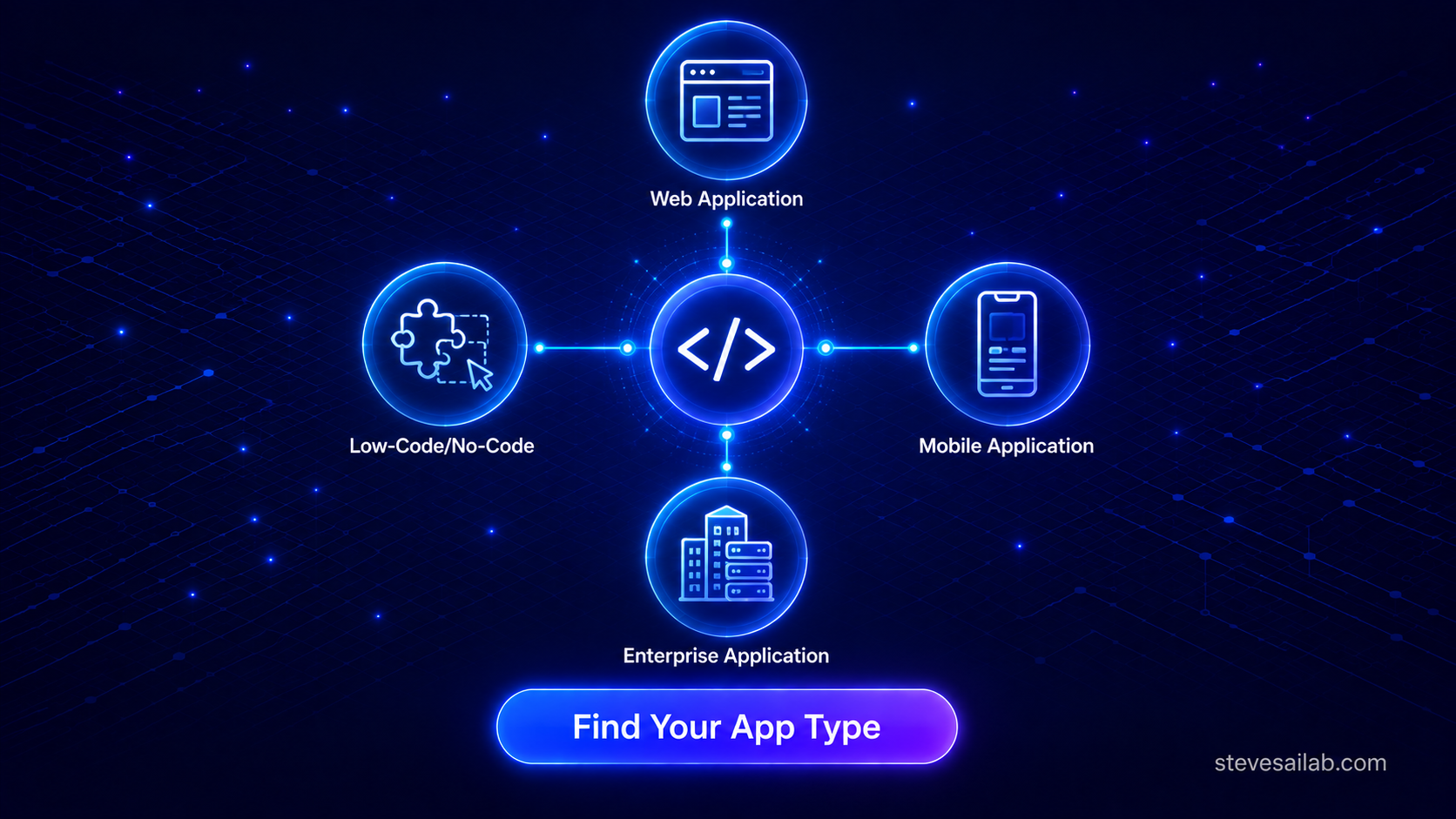
The following are some of the different application types that can be developed:
Category
Description
Best For
This type of application development entails the creation of software application that are run on a web browser.
Customer portals, SaaS applications.
It refers to the development of native mobile applications for iOS and Android.
It is suitable for developing consumer and field service applications.
It entails the development of enterprise-level application software.
This type of development is ideal for developing large-scale business software solutions.
It refers to the development of simple applications using visual development tools.
It is suitable for developing simple and internal tools.
The choice of which application software to use most often depends on the intended use of the application and the target audience. A similar rationale guides the choice of the type of application software to adopt.
Whether to use custom applications or off-the-shelf business applications mostly depends on the level of specificity of business needs and available resources. Whenever there is a need for applications that perform generic functions, it is always more cost-effective to adopt existing software solutions.
Businesses, however, need to invest in the development of custom applications when their business-specific needs cannot be satisfied using existing software solutions.
Most businesses, however, tend to combine both approaches depending on the specific needs of the targeted business process.
Currently, businesses are increasingly looking towards integrating artificial intelligence (AI) into their operations. This has had a significant effect on the application development space as developers are beginning to add AI-centric features into all aspects of modern software application development.
The demand for advanced solutions like Generative AI development services has, therefore, significantly increased as businesses want to be able to offer products like chatbots, recommendation engines, and language models that are directly incorporated with AI capabilities.
When considering potential application developers to hire, most businesses consider several factors. Some of these factors include the years of experience, the relevant technical competencies and skills, and their ability or willingness to support the application even after launch.
A professional and reliable application developer should, therefore, offer end-to-end support throughout the entire development process. Some of the considerations discussed above are only applicable to application development companies that offer the entire package as a single entity.
Application development generally refers to the entire process of conceptualizing, designing, coding, testing, deploying, and maintaining a computer application. Application development services are, therefore, critical for businesses that seek to develop new software applications. Although the specific steps taken in the development of different applications may vary, the overall process often goes through specific stages including requirements gathering, design, architecture design, development, testing, deployment, and maintenance. Businesses should, therefore, consider the importance of well-developed and well-maintained applications in helping them deliver enhanced services to their customers.
It consists of design, construction, coding, testing, maintenance, implementation, and development of software applications for the continuous functioning of computer technologies. In addition, the application development process includes a commitment to designing and developing the user interface and ensuring the quality of the application’s performance.
The time for developing an application varies depending on the design complexity. Therefore, the simplest applications take about several weeks, while more significant programs need about several months for development, testing, and preparation for use in enterprises.
Standard software differs from custom applications in that standard software is designed to perform a standard set of functions, and custom applications are designed to meet specific business requirements. At the same time, both custom application development and standard applications require extensive programming knowledge.
In principle, there are no obstacles to creating applications without a development team, since there are many ready-made solutions in visual programming languages. However, when complex logic, technologies, and data structures are involved, application development companies and teams are needed. Consequently, it all depends on the complexity of the program and the technologies used.
Many companies offering Generative AI Development Services offer to implement various artificial intelligence technologies directly in your application. Therefore, if you do not want to write new applications from scratch, the company offering Generative AI Development Services will help hook up chatbots, recommendation systems, or other technologies.
We help US enterprises make this decision based on their specific workload requirements, existing infrastructure, and long-term AI roadmap - not platform preference.
Get expert insights on your use case and identify the most effective path forward.