
Cloud migration services facilitate the transfer of data, applications, and IT infrastructure from local systems to the cloud with little or no downtime. They can also help companies optimize their IT performance, reduce costs, and ensure business continuity.
Cloud migration services enable businesses to relocate their data, apps, and critical IT assets either partially or entirely from local infrastructure to the cloud. The process is typically handled by experts who can ensure minimal system downtime while migrating sensitive information and applications to the cloud.
Organizations worldwide are witnessing a paradigm shift in the way they leverage technology to achieve business objectives. For instance, cloud migration has become increasingly common over the years mainly because it reduces operational costs and enhances scalability and disaster recovery capabilities. However, migrating to the cloud entails more than just copying and pasting data from one storage platform to another.
Hence, it is essential to entrust such tasks to professional cloud migration services. Whether you are a small business owner looking to relocate your data from physical servers or a large enterprise considering transitioning from legacy infrastructure to modern systems, this guide discusses everything you should know about cloud migration services.
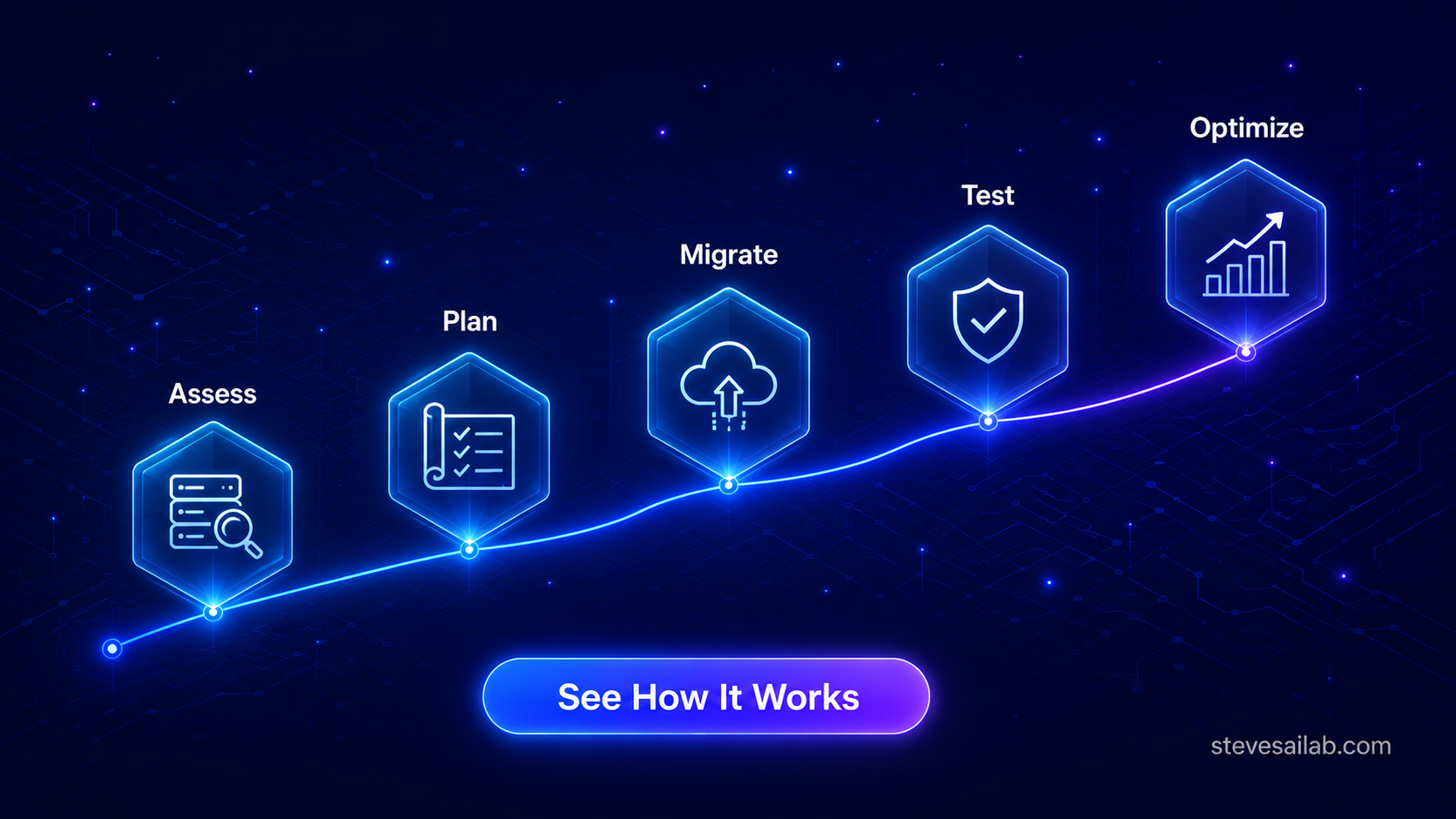
Cloud migration services generally involve moving data, applications, and IT infrastructure, including resources, systems, and processes, from local infrastructure to the cloud. Migration providers usually offer end-to-end solutions that involve assessing, planning, deploying, testing, and supporting cloud transitions. In addition to relocating a company’s digital assets, cloud migration services can help restructure a company’s applications and systems for better performance in the cloud.
Local server management can be expensive, especially when a company needs to deal with the costs of hardware and infrastructure and spend more on expert IT support. Migration to the cloud could help organizations reduce these expenditures significantly.
The primary reason businesses opt to migrate their data, applications, and systems to the cloud is to cut down on capital expenses incurred in dealing with local servers.
There are generally six stages involved in cloud migration, including the discovery of the company’s current infrastructural needs, strategy, design, migration, testing, and optimization. These phases are aimed at helping organizations make an appropriate choice of tools and strategies that can help them achieve their cloud objectives.
Most businesses that intend to migrate to the cloud usually seek the expertise of consultants to help them develop a comprehensive IT strategy that supports long-term business objectives. Apart from migration, cloud service providers could also assist with cloud testing and monitoring solutions which help enhance performance after transition.
It is also critical to consider engaging a reliable company to help you navigate through the complexities associated with cloud migration, especially since such providers have the right tools and the technical know-how to resolve possible issues during the transition.
The following are the five common cloud migration strategies:
Rehost, also known as the lift and shift strategy, is a cloud migration technique that requires little or no code tweaking. It is an appropriate option for organizations that want to relocate their applications, data, and systems to the cloud without making significant changes.
With the replatform strategy, organizations can make slight modifications to their applications and systems and then deploy them on the cloud.
The refactor-in-place strategy works by restructuring a company’s applications before relocating them to the cloud. It is an expensive option, but it is the most suitable option for businesses that want to maximize cloud-native features.
The rebuild strategy is typically used when a company wants to rewrite its legacy systems or applications before relocating them to a cloud environment. It is an expensive strategy that usually takes a relatively long time to implement.
Repurchase involves replacing a company’s legacy technologies with cloud-based software-as-a-service systems.
It is important to remember that cloud migration is merely the first step in achieving greater cloud efficiency. It is, therefore, critical to entrust the management and operation of cloud infrastructure to a reliable cloud provider.
Most cloud migration providers also offer cloud managed service options that can help organizations enhance performance by ensuring the cloud infrastructure is monitored and maintained constantly. Cloud managed services could also assist in providing round-the-clock support, optimizing cloud performance, and reducing expenditures on cloud operations.
In addition to managed services, cloud providers also offer application development support to help businesses redesign their legacy applications and systems so they can operate efficiently in the cloud.
While migrating to the cloud can be beneficial, there are several factors that companies should consider to ensure they only choose an appropriate provider. Some of the key considerations when choosing a cloud migration provider include:
Cloud migration solutions are essential for companies that want to remain competitive in today’s digital economy. For instance, cloud migration services can prevent system downtimes and data loss, as well as reduce IT-related costs significantly. In addition, they also help businesses maximize the benefits of leveraging the cloud while mitigating potential security risks.
The right cloud migration experts could also help you avoid possible downtime and additional expenditures that may arise due to a failed transition. Hence, it is crucial to choose the best cloud provider that can help you navigate the migration process smoothly and transform it into a viable long-term strategic option.
If you run a business and want to optimize your IT performance and reduce costs, consider contacting a cloud migration provider to learn how they could help you achieve your digital transformation goals.
Cloud migration services include assessment, planning, data and application migration, testing, and post-migration support. Cloud migration services often include cloud security services and cloud monitoring services in order to ensure the safety and stability of the transferred data.
Cloud migration can take from several weeks to several months, depending on the complexity and scale of the data migration and the applications involved.
Migrating to the cloud is often associated with high costs due to the complexity and scale of the data migration process. However, these costs are usually offset by the significant reduction in costs associated with maintaining traditional infrastructure. In addition, cloud migration services often allow you to gradually transfer data to the cloud, which reduces the costs associated with migration.
Cloud consulting services focus on providing general advice and guidance to companies in selecting the most cost-effective and beneficial cloud platform for their business. Cloud migration services focus on the actual transfer of data and applications from local servers to cloud servers.
It depends on the specific case, but most often you do not need to develop applications from scratch during the migration process itself. However, in some cases, particularly when working with legacy software, there may be a need for custom application development and cloud application programming.
We help US enterprises make this decision based on their specific workload requirements, existing infrastructure, and long-term AI roadmap - not platform preference.
Get expert insights on your use case and identify the most effective path forward.