
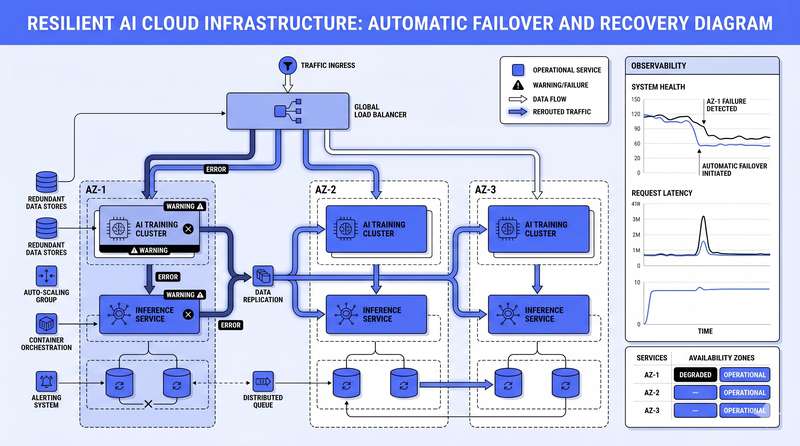
Downtime has always been expensive. Add AI to the equation and the stakes change in ways that many US enterprises have not fully accounted for. When an AI-powered customer service system goes down, for organizations that have reduced human support capacity in anticipation of AI handling the load, an AI system outage creates a customer service crisis. The consequences of AI infrastructure failures are often more severe than equivalent traditional software failures.
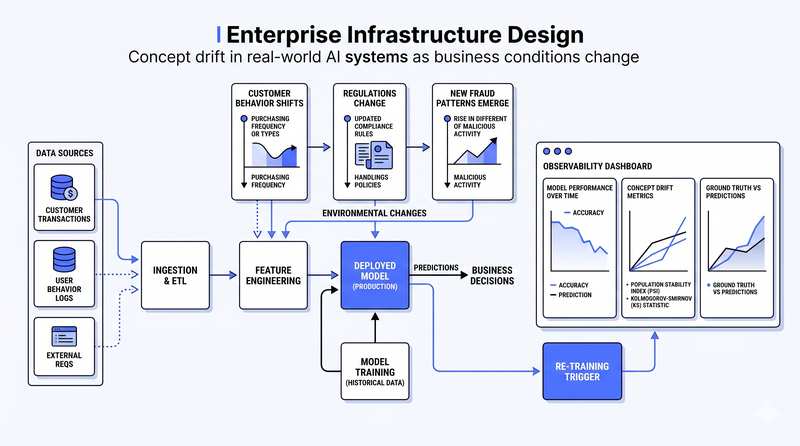
The AI-specific failure modes that traditional infrastructure monitoring cannot detect
Model serving infrastructure failures – servers or containers running inference going down prevents any AI-powered features from functioning. Model performance degradation is a failure mode traditional infrastructure does not have – your servers can be fully operational while your AI system is effectively failing because the model’s performance has degraded below acceptable thresholds. Dependency failures in AI systems cascade more severely – an AI-powered application typically depends on model serving infrastructure, retrieval infrastructure, data pipelines, embedding services, and orchestration layers simultaneously. Latency spikes under load are a common AI infrastructure failure mode that is easy to underestimate during capacity planning.
Redundancy at the model serving layer means running multiple inference infrastructure instances across multiple availability zones, with load balancing that routes traffic away from unhealthy instances instantly. Graceful degradation – rather than failing completely when an AI component is unavailable, well-designed systems fall back to a reduced but functional experience. Circuit breakers prevent cascading failures by automatically stopping requests to a failing dependency before they overwhelm other components. Caching strategies can significantly reduce the load on AI infrastructure components and improve resilience to load spikes for common queries.
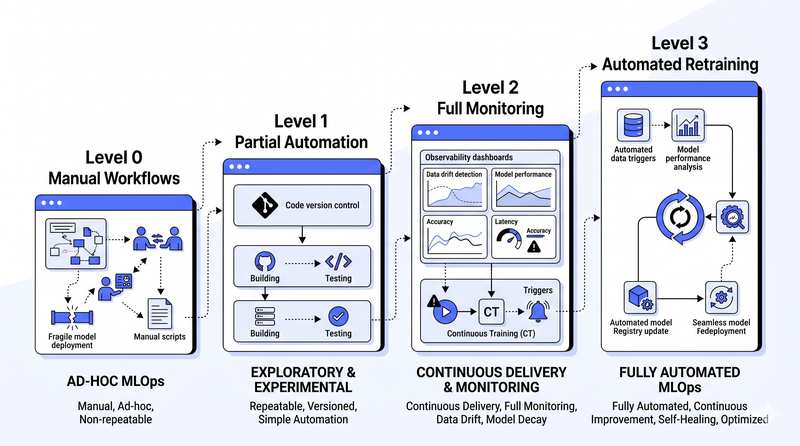
The key differences in capacity planning for AI workloads versus traditional web applications
Building genuinely resilient AI infrastructure costs more upfront than building the minimum viable version. Redundant infrastructure, proper monitoring, graceful degradation, and load testing all require investment that a minimum viable deployment can skip. The cost of skipping this investment is not zero – it is deferred until the first significant outage, at which point it arrives as emergency engineering effort, customer impact, revenue loss, and reputational damage.
We help US enterprises make this decision based on their specific workload requirements, existing infrastructure, and long-term AI roadmap - not platform preference.
Get expert insights on your use case and identify the most effective path forward.